
Solving One-Step Equations
Equations as a Balance
An equation is like a balance scale. Think of an old-fashioned scale with two pans: one on the left and one on the right.
- The left side of the equation goes in the left pan.
- The right side of the equation goes in the right pan.
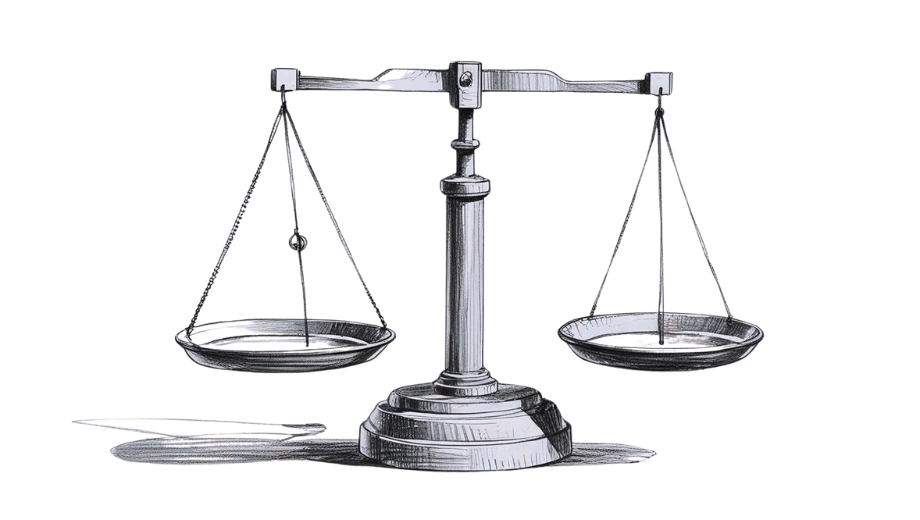 Balance scale: if the scale is balanced, the two pans will be level. If it is unbalanced, one will be higher or lower than the other.
It tips over! Unless you also add the exact same thing to the other side.
The same is true for equations:
- Whatever you do to one side, you must do to the other.
- Otherwise, the “balance” breaks and the equation is no longer true.
x + 3 = 7
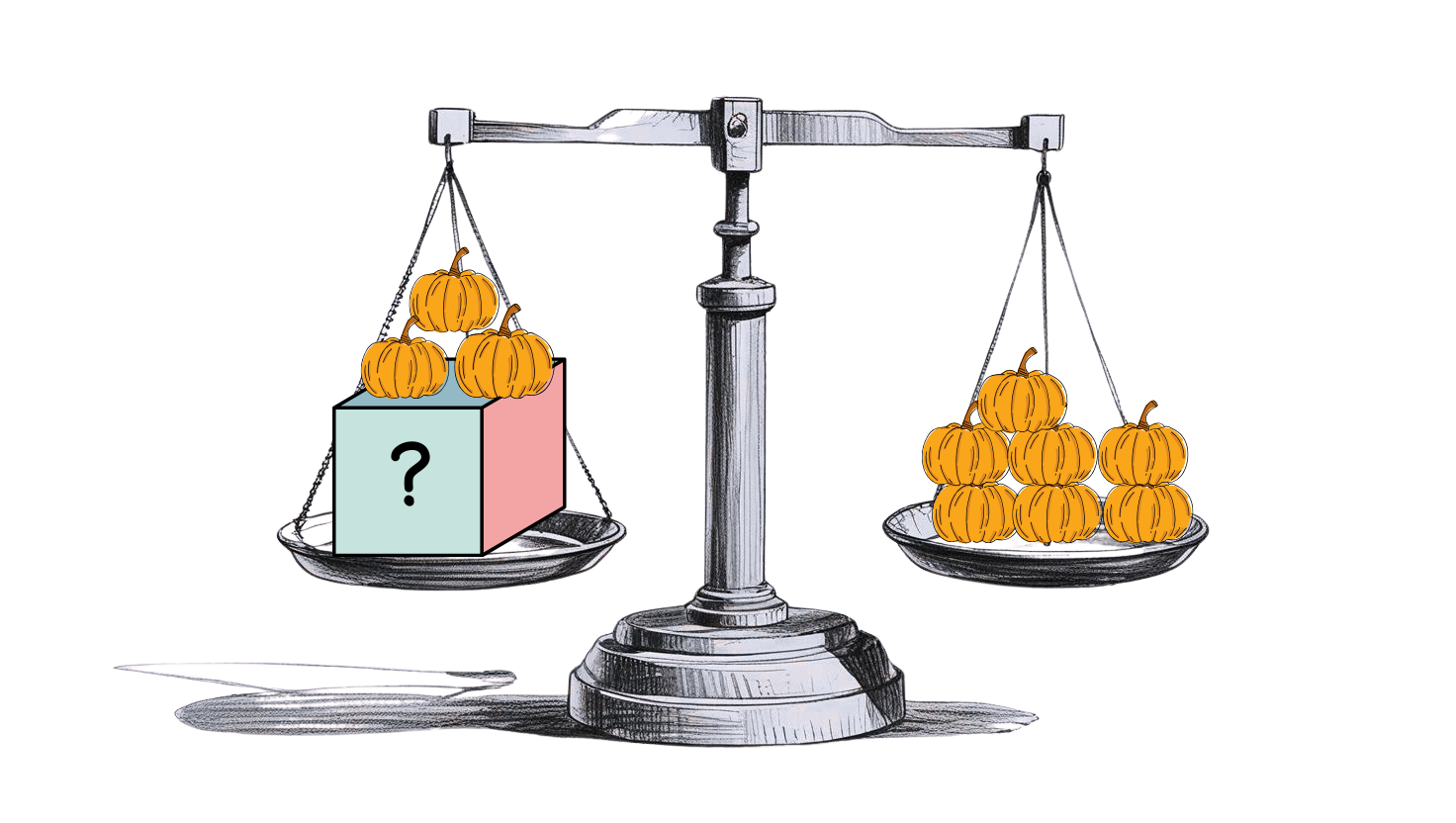 Image Caption
- On the left pan: a mystery box (that’s our x) plus 3 pumpkins.
- On the right pan: 7 pumpkins.
For the scale to balance, the mystery box must weigh the same as 4 pumpkins.
We’ll learn how to actually solve this in the next lesson, but for now, the key idea is:
An equation is a balance. To keep it fair, both sides must change together.
Up Next:
Learn how to solve equations using addition and subtraction, and see how the balance model helps you keep both sides fair.
Learn how to solve equations using addition and subtraction, and see how the balance model helps you keep both sides fair.